The FDA made it harder. Insurance stopped covering most of it. Our lab still runs five days a week.
Here's what compounding actually is, why patients travel across LA for it, and how we decide what we will and won't make.
What "compounding" means
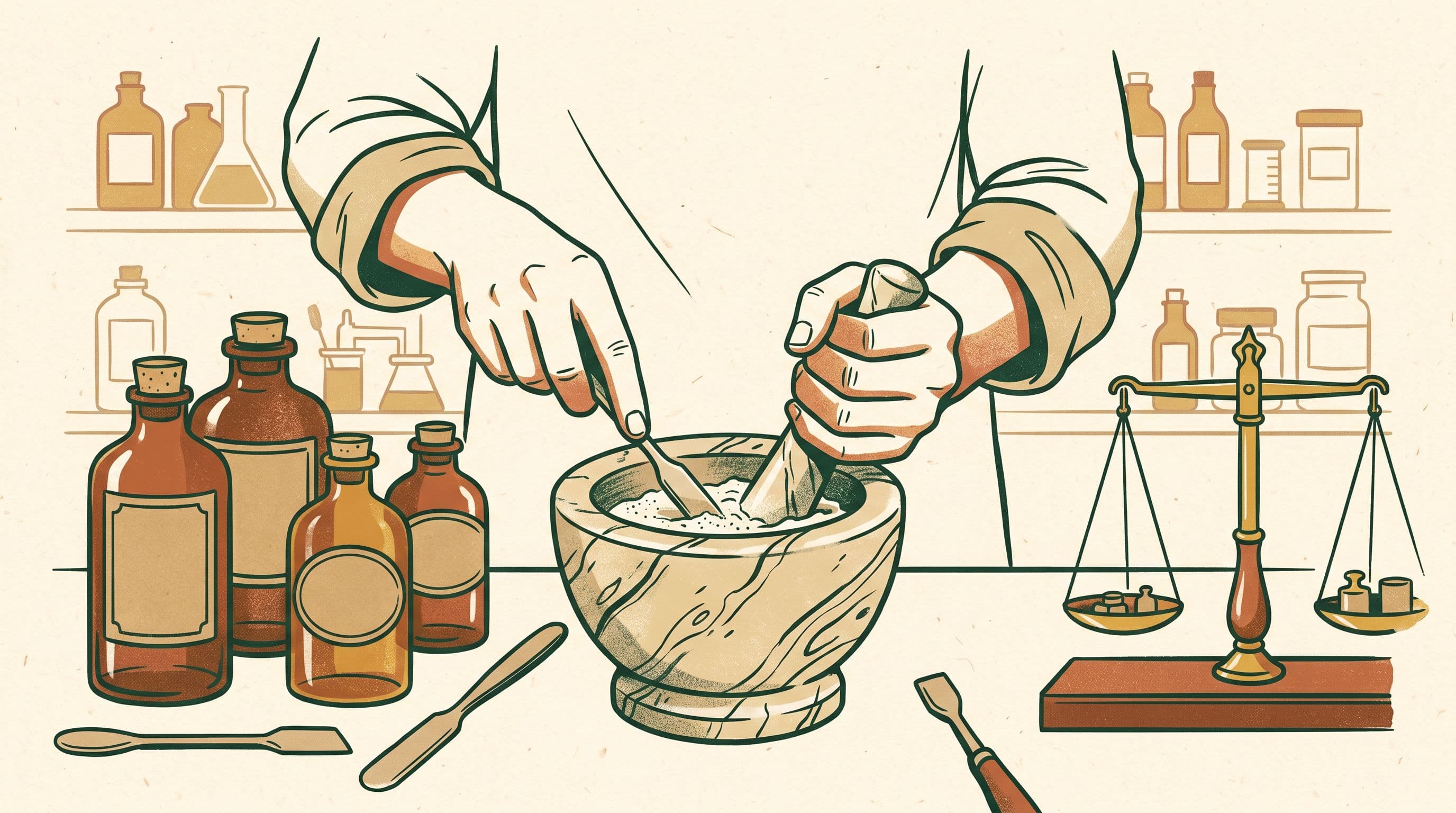
Compounding is the practice of preparing a medication from raw ingredients — either because the commercial version doesn't exist, isn't available, or doesn't fit the patient. It is not off-brand manufacturing. Each prescription is made for an individual patient, at a specific dose, by a licensed pharmacist.
Why our lab still runs
Most pharmacies stopped compounding in the 2000s. We didn't. There are things patients need that the commercial supply chain simply doesn't provide:
- A 1.25mg tablet of a medication that ships in 2.5mg.
- A dye-free, preservative-free liquid for a child with allergies.
- Bioidentical hormones at the exact ratio a patient's body tolerates.
- A veterinary preparation for a cat who won't swallow a pill.
What we won't compound
We'll decline a prescription if the commercial equivalent is safer, cheaper, or more appropriate. We'll also decline anything that doesn't have a clear clinical rationale — compounding is a tool, not a product line.
Call us if you have questions about a formulation you're on, or one you think you need. (310) 247-0247.